🧠 Pluggable Garbage Collectors in Ruby: Exploring the New Modular GC API

February 23, 2026 Ruby has traditionally shipped with a single, built-in garbage collector tightly coupled to the VM. With Ruby 3.4, that assumption begins to change. Feature #20470 introduces an experimental Modular Garbage Collector API, allowing CRuby to load alternative GC implementations at runtime. This marks one of the most significant architectural shifts in Ruby’s … Continue reading 🧠 Pluggable Garbage Collectors in Ruby: Exploring the New Modular GC API

Neither Too Much nor Too Little: A “Touch Base” on the Current State of AI

Neither Too Much nor Too Little: A “Touch Base” on the Current State of AI February 23, 2026 Motivated by the many comments — some fearful, others excessively enthusiastic — about artificial intelligence, I set out to “touch base”: to ground the discussion with a personal perspective on this tool which, no matter how useful … Continue reading Neither Too Much nor Too Little: A “Touch Base” on the Current State of AI

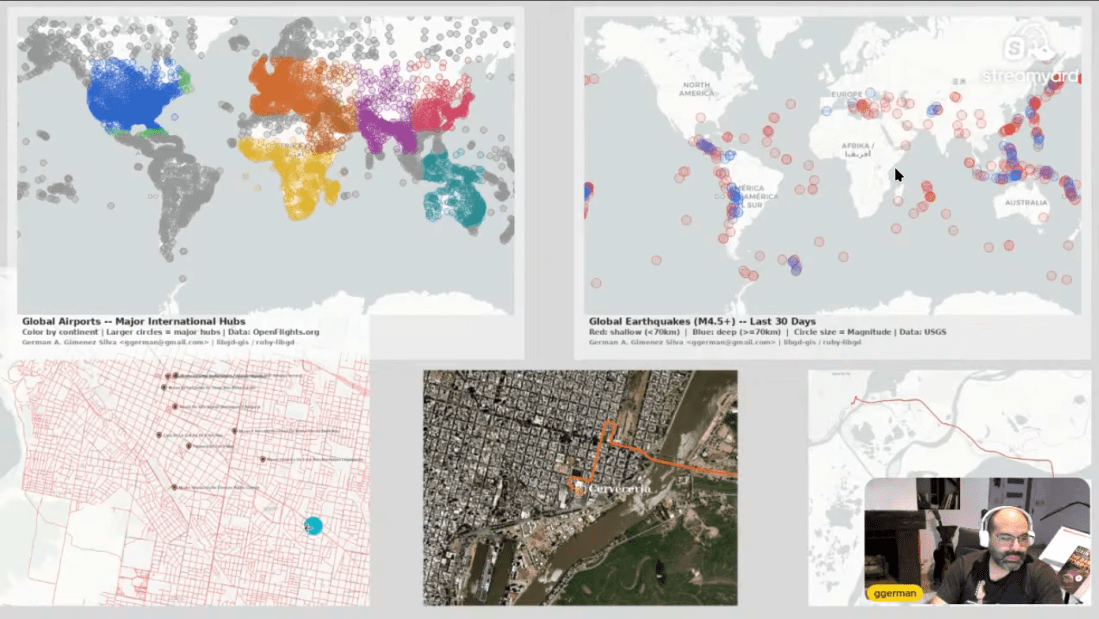
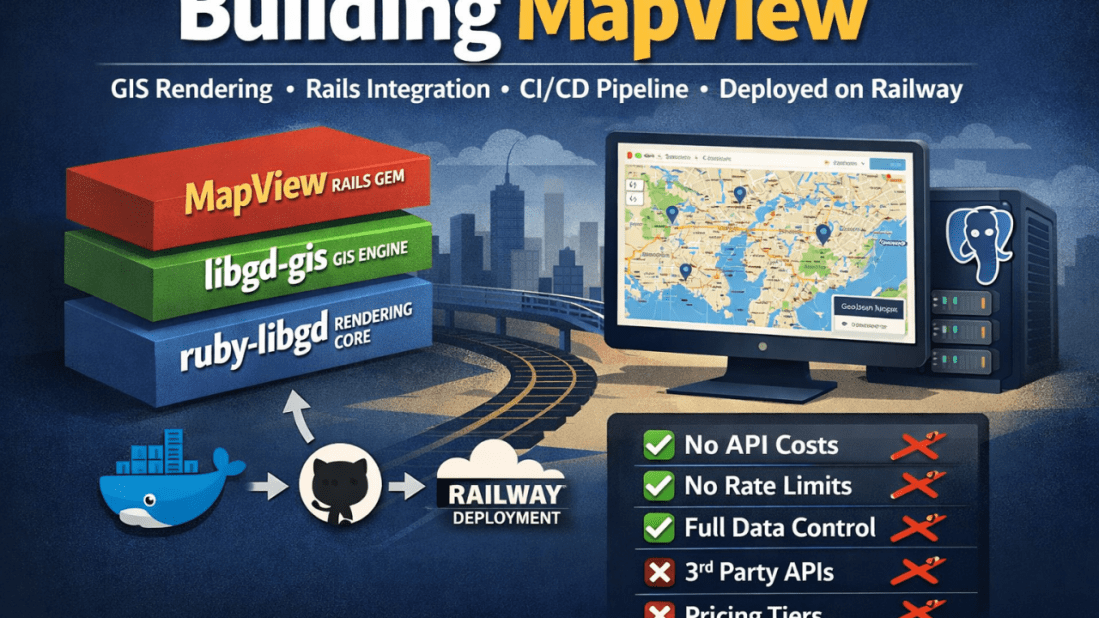
🌍 Rendering Maps by Name: Symbolic Geographic Extents in Ruby

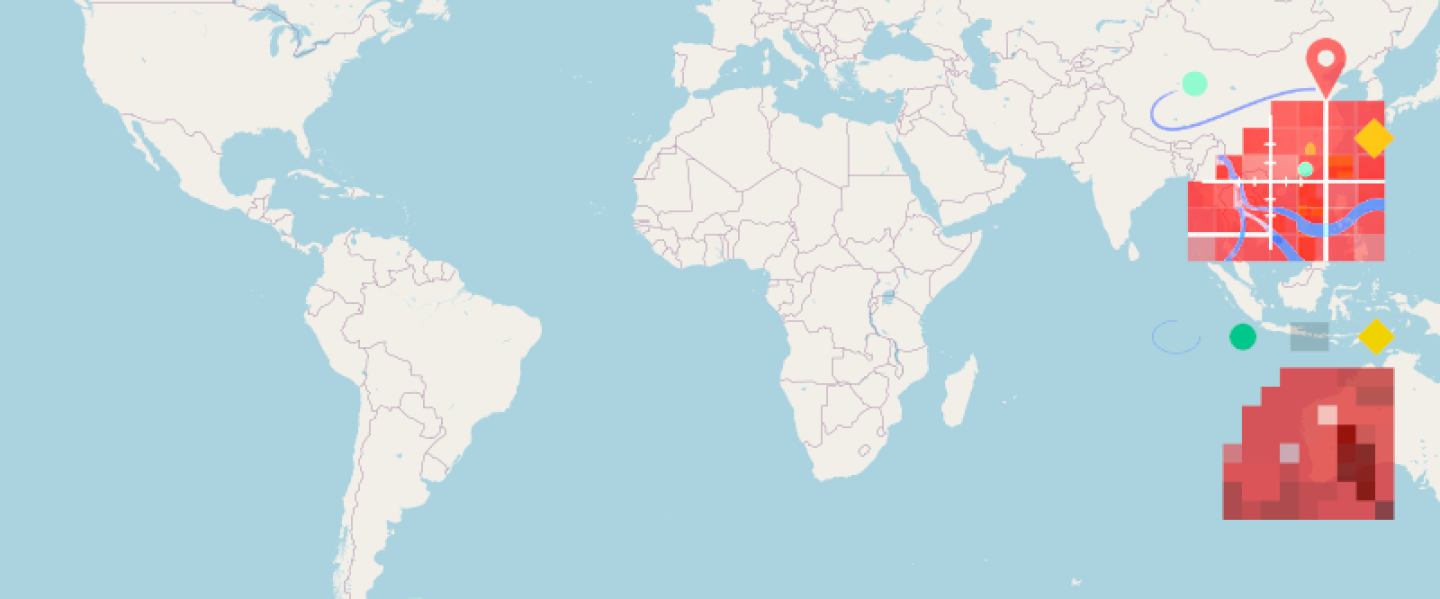
Working with maps usually means working with numbers — lots of numbers. If you want to render a map of a country, region, or continent, you normally need to know its exact bounding box: bbox = [-73.6, -55.1, -53.6, -21.7] # Argentina Not exactly readable. Not memorable. Not friendly. What if you could just say: … Continue reading 🌍 Rendering Maps by Name: Symbolic Geographic Extents in Ruby

🧠 RubyKaigi 2024: A Deep Technical Shift in Ruby’s Standard Library (With Real Examples)

February 20, 2026 RubyKaigi 2024 — Historical ContextAlthough this presentation discusses Ruby 3.4–3.5 and the ecosystem has already moved forward to Ruby 4 by 2026, the strategic shift it describes — reducing the traditional standard library and externalizing functionality as gems — represents a fundamental change in Ruby’s philosophy rather than a version-specific roadmap.Understanding this … Continue reading 🧠 RubyKaigi 2024: A Deep Technical Shift in Ruby’s Standard Library (With Real Examples)

Stop Checking admin?: Designing Authorization That Won’t Become Technical Debt (Kaigi on Rails 2025)

February 17, 2026 Modern Rails applications rarely fail because of authentication — they fail because of authorization complexity. As products grow, roles multiply, exceptions accumulate, and permission checks scatter across controllers, models, views, and frontend code. What begins as a simple current_user.admin? quickly becomes an unmaintainable web of implicit rules. At Kaigi on Rails 2025, … Continue reading Stop Checking admin?: Designing Authorization That Won’t Become Technical Debt (Kaigi on Rails 2025)

From Delayed Job to Solid Queue: How a 10-Year Rails App Finally Achieved Linear Scaling

From Delayed Job to Solid Queue: How a 10-Year Rails App Finally Achieved Linear Scaling February 16, 2026 Lessons from Kaigi on Rails 2025 — Shohei Kobayashi Built for Ruby on Rails Build Maps WithoutGoogle APIs Generate beautiful production-ready maps directly from your Rails backend. Fast rendering, zero external dependencies, full control. View Live Demo … Continue reading From Delayed Job to Solid Queue: How a 10-Year Rails App Finally Achieved Linear Scaling

Only 3% Got It Right: 5 Dangerous Ruby on Rails Code Patterns from RubyKaigi

Only 3% Got It Right: 5 Dangerous Ruby on Rails Code Patterns from RubyKaigi February 9, 2026 At RubyKaigi 2025, a deceptively simple Rails code quiz was presented at a booth. It looked like everyday production code — nothing exotic, no trick questions. About 100 developers attempted it. Only 3 answered everything correctly. This article … Continue reading Only 3% Got It Right: 5 Dangerous Ruby on Rails Code Patterns from RubyKaigi

Tackling Inevitable I/O Latency in Rails

February 6, 2026 Lessons from Kaigi on Rails 2025 on SSE and Async Modern Rails applications increasingly depend on external systems: third-party APIs, background services, data pipelines, and—more recently—AI and LLM inference. While Rails itself continues to evolve in performance and concurrency, I/O latency remains largely unavoidable in many real-world scenarios. At Kaigi on Rails … Continue reading Tackling Inevitable I/O Latency in Rails

Kamal in the Real World: Lessons from Running Rails Apps on AWS

February 4, 2026 At Kaigi on Rails 2025, one talk stood out for being refreshingly honest about infrastructure. Not a tutorial. Not a product pitch. But a real report from production. In Hall Blue, yappu presented: “Kamalって便利?社内プロジェクト3つをKamal + AWSで運用した体験談” (Is Kamal useful? Operating three internal projects with Kamal + AWS) What followed was exactly the … Continue reading Kamal in the Real World: Lessons from Running Rails Apps on AWS

Introducing Type Guard to Steep

Introducing Type Guard to Steep February 2, 2026 Type Narrowing for Real-World Ruby Applications Based on the RubyKaigi 2025 talk “Introducing Type Guard to Steep” by Takeshi Komiya CTO at Time Intermedia Inc., maintainer of rbs_rails and Rails type generators. Presented at RubyKaigi 2025. Context and Attribution This article is a technical analysis and expansion … Continue reading Introducing Type Guard to Steep