
April 15, 2026

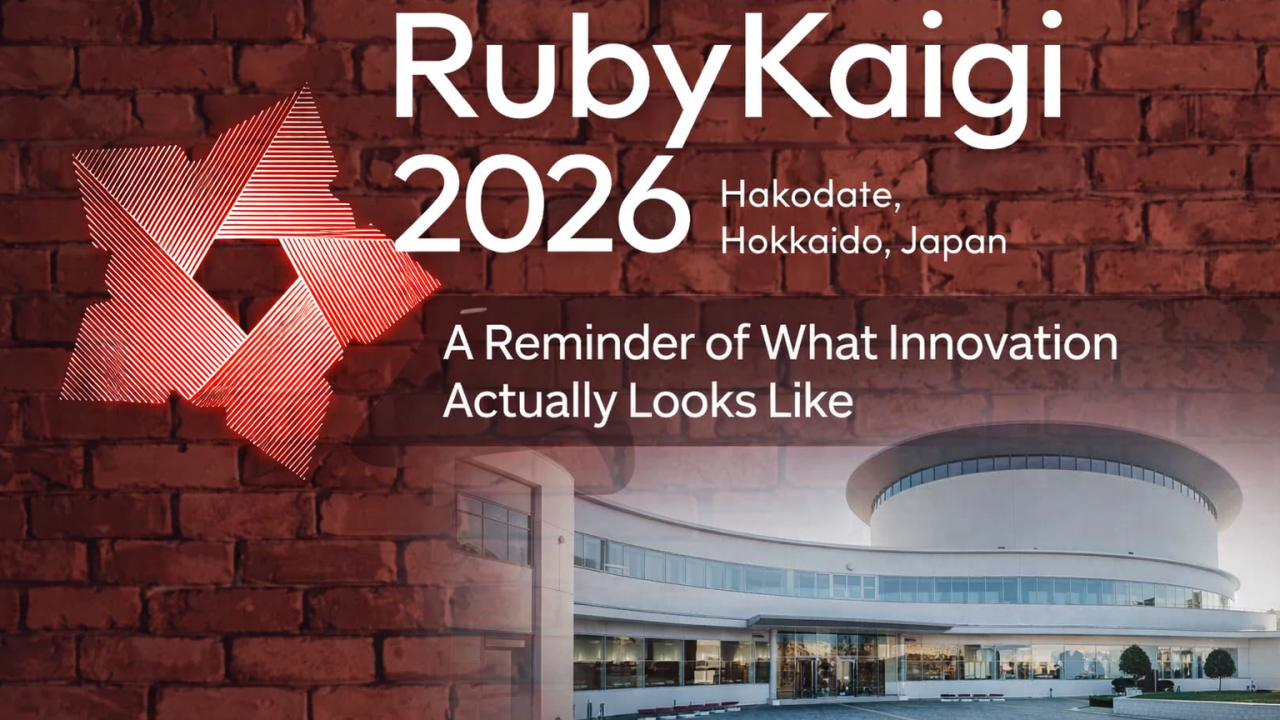
Next week, one of the most important conferences in the Ruby world kicks off: RubyKaigi 2026. Three full days of simultaneous talks across multiple tracks a showcase of what happens when a community refuses to stand still.
Looking at the schedule, something becomes clear: while we talk about “innovation” in the West, the Japanese Ruby community is actually doing it. ZJIT, PicoRuby, MRuby implementations on 8-bit systems, garbage collectors redesigned from scratch, live coding engines these aren’t concepts. They’re shipping, iterating, pushing what’s possible.
The Perfection Trap
Here’s what bothers me: we’ve optimized ourselves into caution.
In many parts of the tech world, we’ve become specialists in a single piece of a larger machine. We perfect our corner, we follow best practices, we minimize risk. And there’s nothing wrong with that until you realize it’s not the same as creation.
Meanwhile, Ruby’s ecosystem keeps growing: new gems, experimental VMs, unconventional use cases (Ruby on NES? Ruby for IoT with MQTT? Ruby as a live coding language?). There’s technical debt, sure. There are rough edges. But there’s also momentum.
What We Lost
I remember when Argentina and much of Latin America hosted vibrant tech conferences. Software Libre communities gathering. Python developers collaborating. We weren’t waiting for permission from Silicon Valley; we were building things, learning together, having fun.
Somewhere along the way, that energy shifted. We became implementers instead of creators. Remote teams for international companies. Consultants optimizing systems built elsewhere. The conferences stopped. The local communities quieted down.
The Real Responsibility
This is where it gets uncomfortable: engineers and computer scientists have a responsibility here.
Our role isn’t just to be cogs in someone else’s machine. It’s to lead this conversation. To build communities. To gather, experiment, fail publicly, and iterate. To be protagonists in the next wave of software, not spectators.
RubyKaigi 2026 is a good moment to ask ourselves: What would our local tech communities look like if we approached them the way Ruby’s community does? Not waiting for perfection, but iterating. Not afraid of technical debt, but aware of it. Not isolated, but connected.
The Invitation
Watch RubyKaigi. Notice the culture of experimentation. See what a healthy, growing ecosystem looks like when people care more about creation than perfection.
Then ask: What can we build here? What community can we gather? What’s the next step for us?
The answer might not come from a conference. It might come from sitting down with three other developers and deciding to make something together.
That’s where it always starts.
RubyKaigi 2026 runs for three days packed with talks on compilers, VMs, performance, and everything in between. If you’re not following along, you should be.