

March 2, 2026
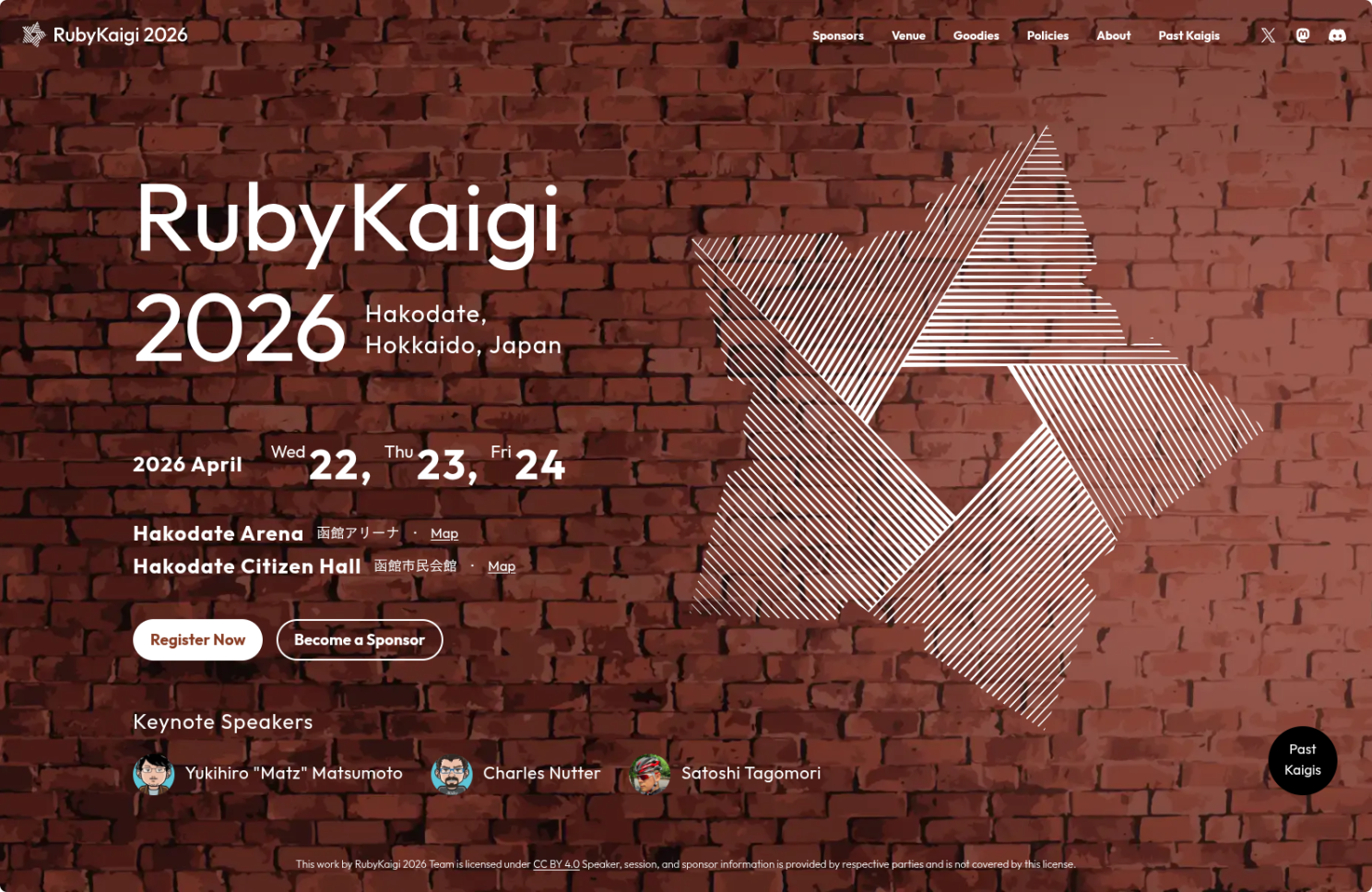
With April approaching, RubyKaigi 2026 is about to take place in Hakodate, Japan — and for the global Ruby community, this is not just another date on the calendar. It is a moment that often defines the technological narrative for the months that follow.
What appears on this stage frequently becomes the reference point for the year’s most advanced discussions: new runtime directions, performance breakthroughs, experimental ideas, and real-world engineering techniques that push Ruby beyond its current boundaries.
For developers outside Japan, this is precisely why attention must be deliberate and careful.
A Conference That Quietly Sets the Tone for the Year
Kaigi events are not driven by marketing announcements or product launches. Instead, they reveal what engineers are actually building, testing, and questioning at the deepest levels of the ecosystem.
Historically, the themes explored at these conferences often foreshadow:
- Upcoming performance strategies
- Emerging concurrency approaches
- Tooling and infrastructure evolution
- New patterns for large-scale systems
- Practical solutions to previously hard or “unsolved” problems
- Experimental ideas that may mature into future features
In many cases, the broader community only recognizes these trends months or years later — after they have been refined and adopted more widely.
Why This Matters Especially in 2026
The Ruby ecosystem is currently navigating a period of accelerated technical evolution. Improvements in execution speed, parallelism, deployment models, and interoperability are reshaping what the language can realistically achieve.
Against this backdrop, the discussions at RubyKaigi 2026 may serve as a preview of the next stage of that transformation.
Paying attention now means understanding:
- Which problems are considered critical
- Which solutions are gaining traction
- Which assumptions are being challenged
- Which directions may influence future releases
Ignoring these signals risks operating with an outdated mental model of the language.
A Call for Careful Observation
For Spanish-speaking and English-speaking communities — where direct coverage is often limited — the responsibility is greater. Insights do not automatically disseminate across linguistic or geographic boundaries.
Careful attention involves more than scanning headlines. It requires:
- Following technical summaries and recordings when available
- Examining the underlying ideas, not just conclusions
- Distinguishing experimental work from production-ready guidance
- Understanding the context in which solutions were developed
This level of observation allows developers to extract long-term value rather than chasing short-lived trends.
Beyond Hype: Understanding the Direction of Travel
RubyKaigi does not promise immediate changes to everyday development workflows. Instead, it provides something more valuable: visibility into the direction of travel.
Some ideas presented may never reach mainstream adoption. Others may quietly shape the language, tooling, and best practices for years to come.
What matters is not predicting specific outcomes, but recognizing the trajectory.
Final Thought
As RubyKaigi 2026 approaches this April, it offers a rare opportunity to observe the ecosystem thinking aloud about its future.
For developers who care about building optimized systems, pushing technical limits, or simply staying aligned with Ruby’s long-term evolution, this is a moment worth watching closely.
Not because it will produce instant answers — but because it reveals the questions that will define the year ahead.

 Linking Ruby knowledge from the most remote places in the world.