Choosing the Right Debugger: TracePoint, ISeq, and why your choice of debugger affects more than just comfort
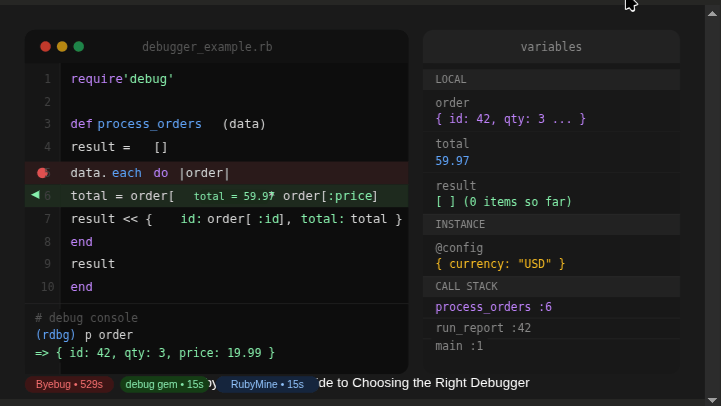
Choosing the Right Debugger March 12, 2026 A Ruby Developer's Guide to TracePoint, ISeq, and why your choice of debugger affects more than just comfort If you write Ruby, you debug Ruby. Whether it's a subtle off-by-one error in a data pipeline or a race condition buried in a Rails controller, debugging is as much … Continue reading Choosing the Right Debugger: TracePoint, ISeq, and why your choice of debugger affects more than just comfort

Ruby on Rails on WebAssembly: A Full-Stack, In-Browser Journey

March 11, 2026 What if you could run a fully functional Rails application — backend, database, file storage, and all — directly inside a browser tab, with zero servers? WebAssembly (Wasm) makes this possible. By compiling Ruby and Rails into a Wasm module, the entire application stack executes client-side. This post explores a practical journey: … Continue reading Ruby on Rails on WebAssembly: A Full-Stack, In-Browser Journey

Ruby 4 & Rails 8: A Multi-Front Acceleration of the Ruby Ecosystem

February 26, 2026 In recent years, Ruby and Ruby on Rails have quietly entered a phase of rapid, multidimensional evolution. Rather than a single disruptive change, what we are witnessing is a coordinated advance across the runtime, the framework, infrastructure tooling, and application capabilities. This shift has been especially visible in talks from RubyKaigi 2024–2026 … Continue reading Ruby 4 & Rails 8: A Multi-Front Acceleration of the Ruby Ecosystem

Rails Meets PostgreSQL 18

February 11, 2026 Compatibility, Protocol Changes, and Virtual Generated Columns in Rails 8.1 At Kaigi on Rails 2025, Rails Committer Yasuo Honda delivered a deep technical walkthrough titled: Rails meets PostgreSQL 18 PostgreSQL 18 was officially released on September 25, 2025, and the talk explains how Rails adapts — not just at the marketing level, … Continue reading Rails Meets PostgreSQL 18

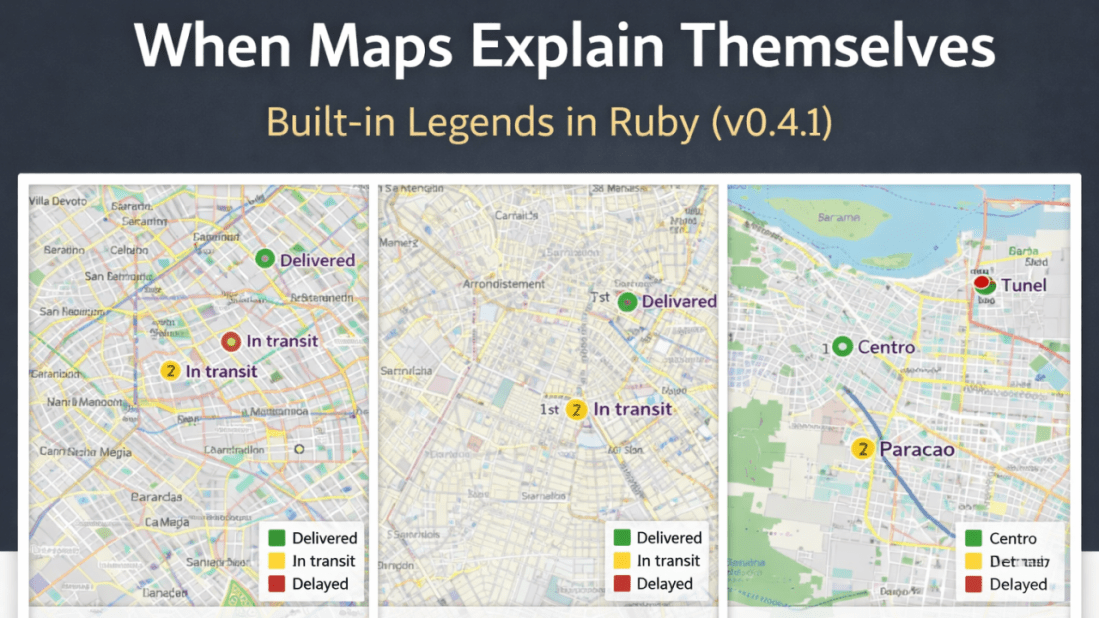
When Maps Explain Themselves: Legends, Style, and Finished Images in Ruby

February 10, 2026 Introduction libgd-gis now supports legends, introducing a fundamental building block in map communication. With the release of v0.4.1, legends become a first-class feature of the rendering pipeline, pushing the library one step closer to covering the essential capabilities expected from a modern GIS engine. Legends are not just a visual accessory. They … Continue reading When Maps Explain Themselves: Legends, Style, and Finished Images in Ruby

Only 3% Got It Right: 5 Dangerous Ruby on Rails Code Patterns from RubyKaigi

Only 3% Got It Right: 5 Dangerous Ruby on Rails Code Patterns from RubyKaigi February 9, 2026 At RubyKaigi 2025, a deceptively simple Rails code quiz was presented at a booth. It looked like everyday production code — nothing exotic, no trick questions. About 100 developers attempted it. Only 3 answered everything correctly. This article … Continue reading Only 3% Got It Right: 5 Dangerous Ruby on Rails Code Patterns from RubyKaigi

Kamal in the Real World: Lessons from Running Rails Apps on AWS

February 4, 2026 At Kaigi on Rails 2025, one talk stood out for being refreshingly honest about infrastructure. Not a tutorial. Not a product pitch. But a real report from production. In Hall Blue, yappu presented: “Kamalって便利?社内プロジェクト3つをKamal + AWSで運用した体験談” (Is Kamal useful? Operating three internal projects with Kamal + AWS) What followed was exactly the … Continue reading Kamal in the Real World: Lessons from Running Rails Apps on AWS

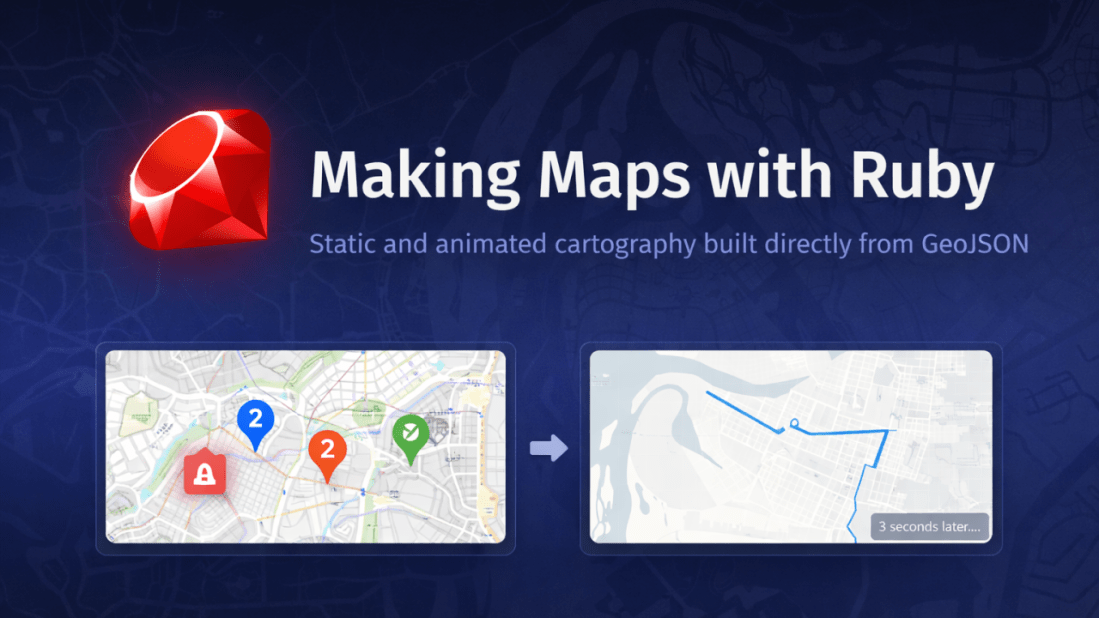
Making Maps with Ruby

Making Maps with Ruby January 29, 2026 Static and animated cartography built directly from GeoJSON For a long time, generating maps from code meant working inside heavy ecosystems designed primarily for analysis. Those tools are powerful, but they are not always the right fit. In many practical scenarios, the problem is simpler and more concrete: … Continue reading Making Maps with Ruby

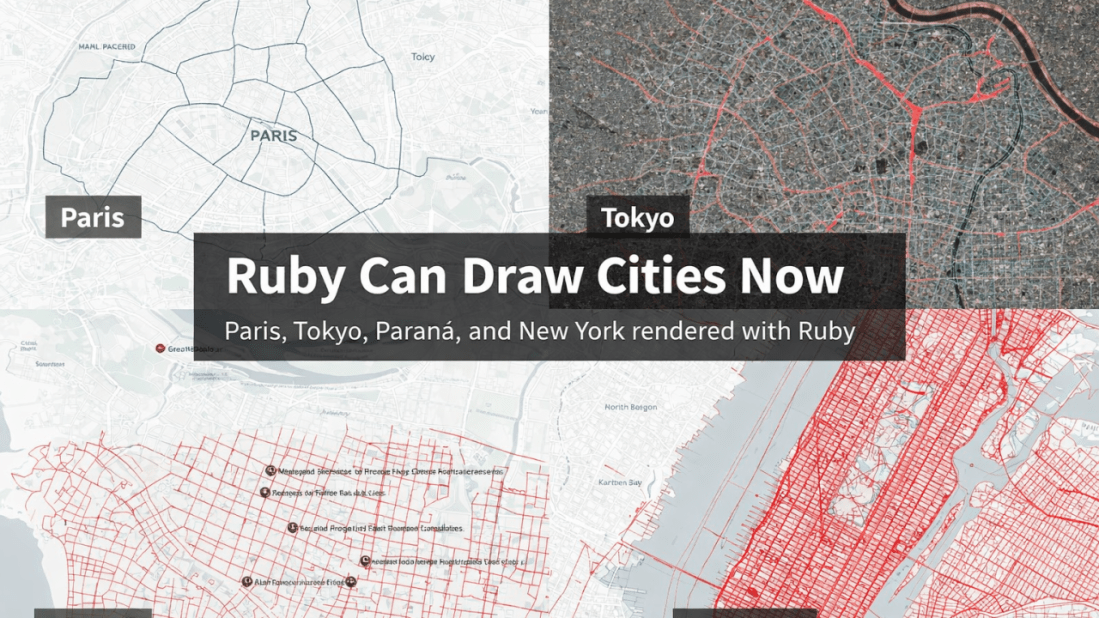
Ruby Can Draw Cities Now

January 9, 2026 How I built a pure-Ruby GIS engine that renders Paris, Tokyo, New York, and more Most people don’t think of Ruby when they think about maps, GIS, or visual computing. If you want to draw a real city, the standard stack usually looks like: QGIS PostGIS Mapnik Mapbox or a heavy JavaScript … Continue reading Ruby Can Draw Cities Now

🚀 Bundler 4.0.0.beta1: A Big Step Forward for Writing Clean and Modern Ruby

Bundler 4.0.0.beta1: A Big Step Forward for Writing Clean and Modern Ruby November 27, 2025 As Ruby developers, we know that writing Ruby isn’t just about shipping code or passing specs. Our workflow depends a lot on understanding the latest improvements in the ecosystem, keeping an eye on what’s being deprecated, and making sure our … Continue reading 🚀 Bundler 4.0.0.beta1: A Big Step Forward for Writing Clean and Modern Ruby