2D Histograms in Pure Ruby

2D Histograms in Pure Ruby March 18, 2026 Published on RubyStackNews One of the most useful tools in exploratory data analysis is the 2D histogram. Not the bar chart kind — the density map kind. Given a cloud of points, it answers a simple question: where do most of them live? This article shows how … Continue reading 2D Histograms in Pure Ruby

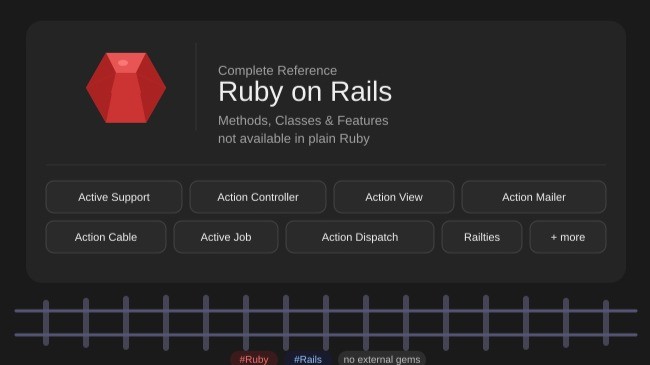
Ruby on Rails — Complete Reference of Methods, Classes & Features Not in Ruby

Ruby on Rails — Complete Reference of Methods, Classes & Features Not in Ruby March 17, 2026 Rails is much more than a framework on top of Ruby — it adds hundreds of methods, classes, and abstractions that plain Ruby simply doesn't have. This is a complete reference of everything Rails brings to the table, … Continue reading Ruby on Rails — Complete Reference of Methods, Classes & Features Not in Ruby

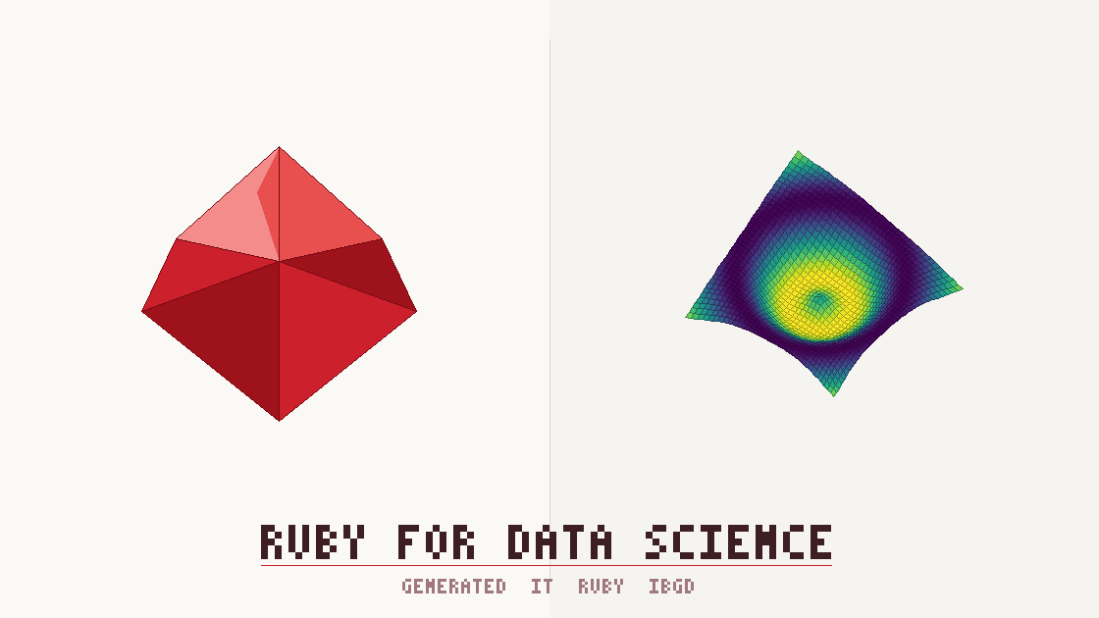
Ruby for Data Science — Is It Possible?

March 16, 2026 Published on RubyStackNews After the last article, Jupyter proved to be an awesome sandbox for testing code interactively. I spent the entire weekend asking myself one question: can Ruby render a real 3D plot? I started convinced the answer was no. By Sunday night, ruby-libgd had proven me wrong. The question nobody … Continue reading Ruby for Data Science — Is It Possible?

Plotting Mathematical Functions in Ruby, Inside Jupyter

Plotting Mathematical Functions in Ruby, Inside Jupyter March 13, 2026 ruby-libgd: Scientific Plotting Comes to Ruby The Envy We Never Talked About Anyone who has spent serious time with Ruby and then watched a Python developer type plt.show() to produce a beautiful Matplotlib graph in a Jupyter notebook knows the feeling. It is not quite … Continue reading Plotting Mathematical Functions in Ruby, Inside Jupyter

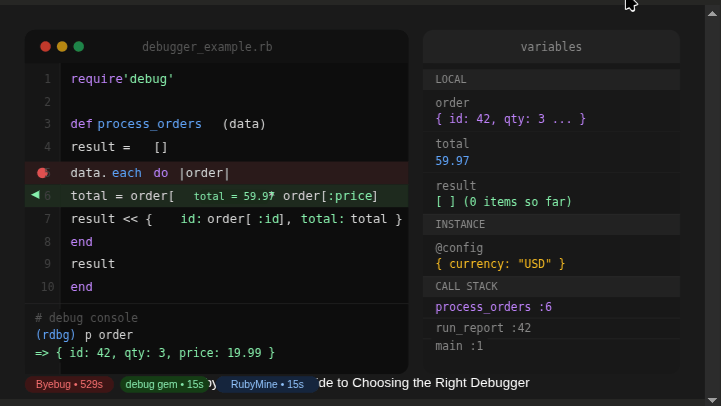
Choosing the Right Debugger: TracePoint, ISeq, and why your choice of debugger affects more than just comfort

Choosing the Right Debugger March 12, 2026 A Ruby Developer's Guide to TracePoint, ISeq, and why your choice of debugger affects more than just comfort If you write Ruby, you debug Ruby. Whether it's a subtle off-by-one error in a data pipeline or a race condition buried in a Rails controller, debugging is as much … Continue reading Choosing the Right Debugger: TracePoint, ISeq, and why your choice of debugger affects more than just comfort

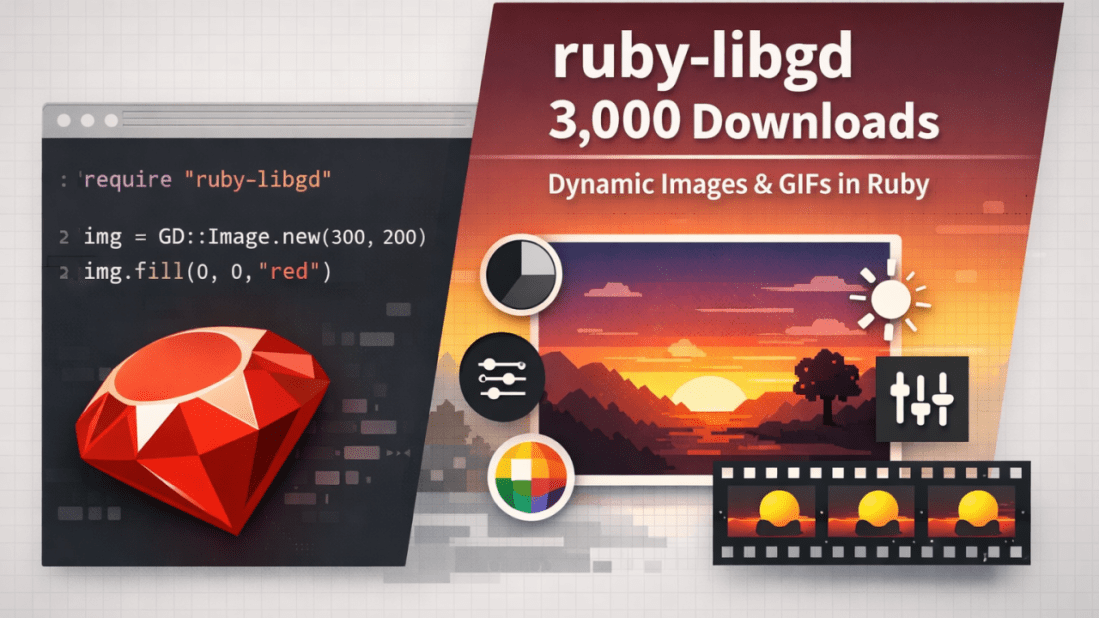
Ruby-LibGD Reaches 3,000 Downloads: A Milestone in Ruby Image Generation

Ruby-LibGD Reaches 3,000 Downloads: A Milestone in Ruby Image Generation March 9, 2026 Open-source development is often a marathon, not a sprint. Today, ruby-libgd, a Ruby library for image generation, has reached an exciting milestone: 3,000 downloads. This achievement reflects not only adoption but also the sustained effort behind a library that brings dynamic image … Continue reading Ruby-LibGD Reaches 3,000 Downloads: A Milestone in Ruby Image Generation

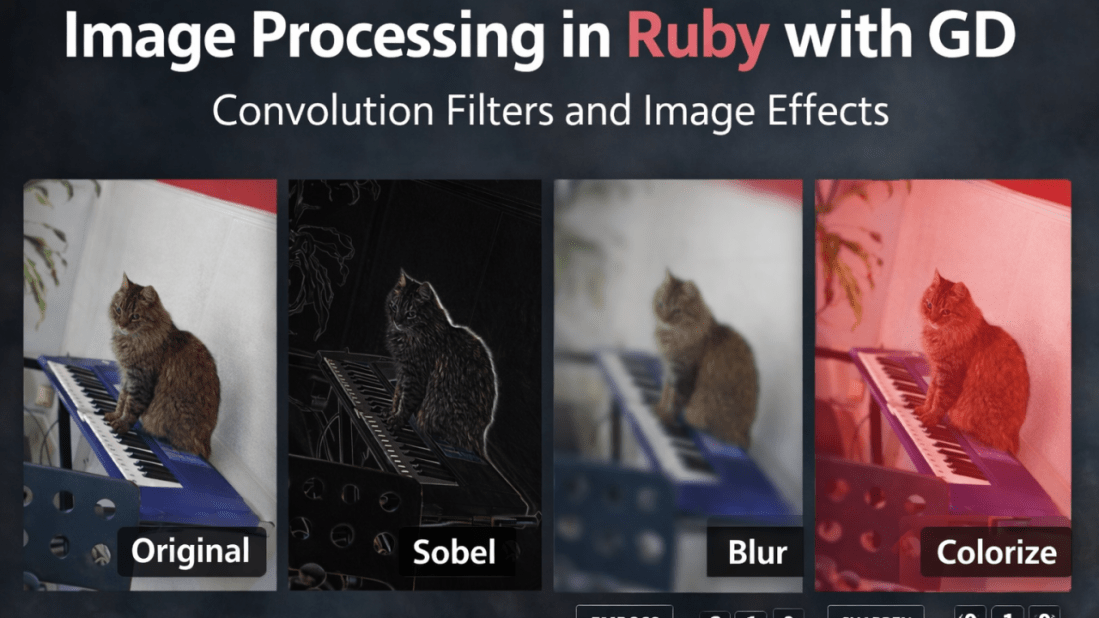
Image Processing in Ruby with GD: Exploring ruby-libgd v0.3.0

Image Processing in Ruby with GD: Exploring ruby-libgd v0.3.0 March 4, 2026 Image processing is usually associated with languages like Python or C++, but Ruby can also manipulate images efficiently thanks to bindings for native libraries. One of those libraries is libgd, a well-known C library used to dynamically generate and manipulate images such as … Continue reading Image Processing in Ruby with GD: Exploring ruby-libgd v0.3.0

🇯🇵 Kaigi 2026 Is Approaching — Why the Global Ruby Community Should Pay Close Attention

Kaigi 2026 Is Approaching — Why the Global Ruby Community Should Pay Close Attention March 2, 2026 With April approaching, RubyKaigi 2026 is about to take place in Hakodate, Japan — and for the global Ruby community, this is not just another date on the calendar. It is a moment that often defines the technological … Continue reading 🇯🇵 Kaigi 2026 Is Approaching — Why the Global Ruby Community Should Pay Close Attention

Ruby 4 & Rails 8: A Multi-Front Acceleration of the Ruby Ecosystem

February 26, 2026 In recent years, Ruby and Ruby on Rails have quietly entered a phase of rapid, multidimensional evolution. Rather than a single disruptive change, what we are witnessing is a coordinated advance across the runtime, the framework, infrastructure tooling, and application capabilities. This shift has been especially visible in talks from RubyKaigi 2024–2026 … Continue reading Ruby 4 & Rails 8: A Multi-Front Acceleration of the Ruby Ecosystem

🧠 Pluggable Garbage Collectors in Ruby: Exploring the New Modular GC API

February 23, 2026 Ruby has traditionally shipped with a single, built-in garbage collector tightly coupled to the VM. With Ruby 3.4, that assumption begins to change. Feature #20470 introduces an experimental Modular Garbage Collector API, allowing CRuby to load alternative GC implementations at runtime. This marks one of the most significant architectural shifts in Ruby’s … Continue reading 🧠 Pluggable Garbage Collectors in Ruby: Exploring the New Modular GC API