SVG Generation in Ruby: A Practical Guide
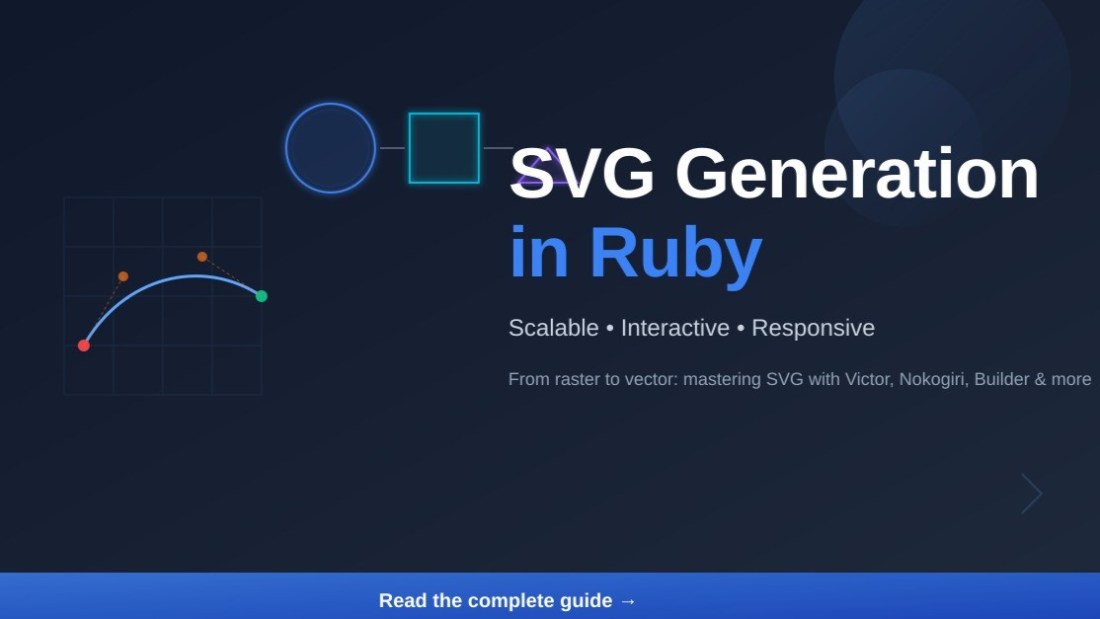
SVG Generation in Ruby: A Practical Guide March 16, 2026 Recently, I created ruby-libgd and libgd-gis for raster graphics generation in cartography. But as I worked on these tools, I realized the landscape of web graphics has shifted significantly. Today's web demands interactive, scalable, responsive visualizations. That's where SVG (Scalable Vector Graphics) comes in. This … Continue reading SVG Generation in Ruby: A Practical Guide
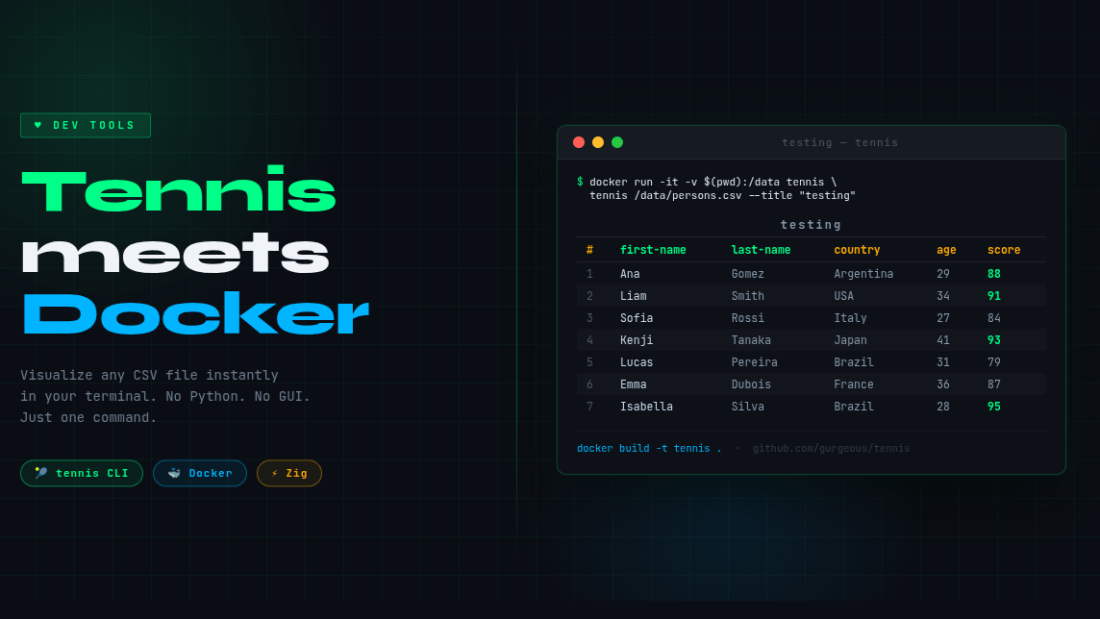
🎾 Tennis: The Quickest Way to Visualize CSV Files in Your Terminal

🎾 Tennis: The Quickest Way to Visualize CSV Files in Your Terminal March 12, 2026 Ever open Excel or fire up a Python script just to peek at a CSV file? There’s a faster, cleaner way. Meet tennis — a blazing-fast terminal table viewer built in Zig. No Python. No pandas. No GUI. Just clean, … Continue reading 🎾 Tennis: The Quickest Way to Visualize CSV Files in Your Terminal

Ruby on Rails on WebAssembly: A Full-Stack, In-Browser Journey

March 11, 2026 What if you could run a fully functional Rails application — backend, database, file storage, and all — directly inside a browser tab, with zero servers? WebAssembly (Wasm) makes this possible. By compiling Ruby and Rails into a Wasm module, the entire application stack executes client-side. This post explores a practical journey: … Continue reading Ruby on Rails on WebAssembly: A Full-Stack, In-Browser Journey

mruby Gems: Extending Ruby for Embedded Systems

mruby Gems: Extending Ruby for Embedded Systems March 11, 2026 Most developers associate Ruby with web development. Frameworks like Ruby on Rails helped Ruby become one of the most productive languages for building web applications. However, Ruby is not limited to servers or web frameworks. Ruby can also run in places far away from data … Continue reading mruby Gems: Extending Ruby for Embedded Systems

🇯🇵 Kaigi 2026 Is Approaching — Why the Global Ruby Community Should Pay Close Attention

Kaigi 2026 Is Approaching — Why the Global Ruby Community Should Pay Close Attention March 2, 2026 With April approaching, RubyKaigi 2026 is about to take place in Hakodate, Japan — and for the global Ruby community, this is not just another date on the calendar. It is a moment that often defines the technological … Continue reading 🇯🇵 Kaigi 2026 Is Approaching — Why the Global Ruby Community Should Pay Close Attention

🦀 Rust Inside Ruby Core: A New Systems Layer for MRI

February 27, 2026 For nearly three decades, CRuby (MRI) has been overwhelmingly a C codebase. That stability has been both a strength and a constraint. Recently, however, something genuinely new appeared inside the official Ruby repository: Parts of Ruby itself are now written in Rust. This is not theoretical, experimental folklore, or third-party tooling. It … Continue reading 🦀 Rust Inside Ruby Core: A New Systems Layer for MRI

🧱 Rack Is Still Innovating: The Backbone of Ruby’s Web Stack Keeps Evolving

Rack Is Still Innovating: The Backbone of Ruby’s Web Stack Keeps Evolving February 26, 2026 In recent months, much of the conversation in the Ruby ecosystem has focused on Ruby 4, Rails 8, concurrency, JIT compilers, and runtime capabilities. But while attention was on the language and frameworks, one critical component — present in every … Continue reading 🧱 Rack Is Still Innovating: The Backbone of Ruby’s Web Stack Keeps Evolving

Ruby 4 & Rails 8: A Multi-Front Acceleration of the Ruby Ecosystem

February 26, 2026 In recent years, Ruby and Ruby on Rails have quietly entered a phase of rapid, multidimensional evolution. Rather than a single disruptive change, what we are witnessing is a coordinated advance across the runtime, the framework, infrastructure tooling, and application capabilities. This shift has been especially visible in talks from RubyKaigi 2024–2026 … Continue reading Ruby 4 & Rails 8: A Multi-Front Acceleration of the Ruby Ecosystem

🧠 Pluggable Garbage Collectors in Ruby: Exploring the New Modular GC API

February 23, 2026 Ruby has traditionally shipped with a single, built-in garbage collector tightly coupled to the VM. With Ruby 3.4, that assumption begins to change. Feature #20470 introduces an experimental Modular Garbage Collector API, allowing CRuby to load alternative GC implementations at runtime. This marks one of the most significant architectural shifts in Ruby’s … Continue reading 🧠 Pluggable Garbage Collectors in Ruby: Exploring the New Modular GC API

Neither Too Much nor Too Little: A “Touch Base” on the Current State of AI

Neither Too Much nor Too Little: A “Touch Base” on the Current State of AI February 23, 2026 Motivated by the many comments — some fearful, others excessively enthusiastic — about artificial intelligence, I set out to “touch base”: to ground the discussion with a personal perspective on this tool which, no matter how useful … Continue reading Neither Too Much nor Too Little: A “Touch Base” on the Current State of AI