🚀 Terminal UX in Ruby: Beautiful Tools Without Leaving the Shell

March 1, 2026 The Modern CLI Stack Beyond puts Ruby is often associated with web applications, background jobs, and scripting. But quietly — almost underground — a rich ecosystem has emerged for building modern, interactive, polished terminal applications. Not the old “print some text and parse ARGV” style. We’re talking about tools that feel closer … Continue reading 🚀 Terminal UX in Ruby: Beautiful Tools Without Leaving the Shell
🧱 Rack Is Still Innovating: The Backbone of Ruby’s Web Stack Keeps Evolving

Rack Is Still Innovating: The Backbone of Ruby’s Web Stack Keeps Evolving February 26, 2026 In recent months, much of the conversation in the Ruby ecosystem has focused on Ruby 4, Rails 8, concurrency, JIT compilers, and runtime capabilities. But while attention was on the language and frameworks, one critical component — present in every … Continue reading 🧱 Rack Is Still Innovating: The Backbone of Ruby’s Web Stack Keeps Evolving

🧠 Pluggable Garbage Collectors in Ruby: Exploring the New Modular GC API

February 23, 2026 Ruby has traditionally shipped with a single, built-in garbage collector tightly coupled to the VM. With Ruby 3.4, that assumption begins to change. Feature #20470 introduces an experimental Modular Garbage Collector API, allowing CRuby to load alternative GC implementations at runtime. This marks one of the most significant architectural shifts in Ruby’s … Continue reading 🧠 Pluggable Garbage Collectors in Ruby: Exploring the New Modular GC API

Neither Too Much nor Too Little: A “Touch Base” on the Current State of AI

Neither Too Much nor Too Little: A “Touch Base” on the Current State of AI February 23, 2026 Motivated by the many comments — some fearful, others excessively enthusiastic — about artificial intelligence, I set out to “touch base”: to ground the discussion with a personal perspective on this tool which, no matter how useful … Continue reading Neither Too Much nor Too Little: A “Touch Base” on the Current State of AI

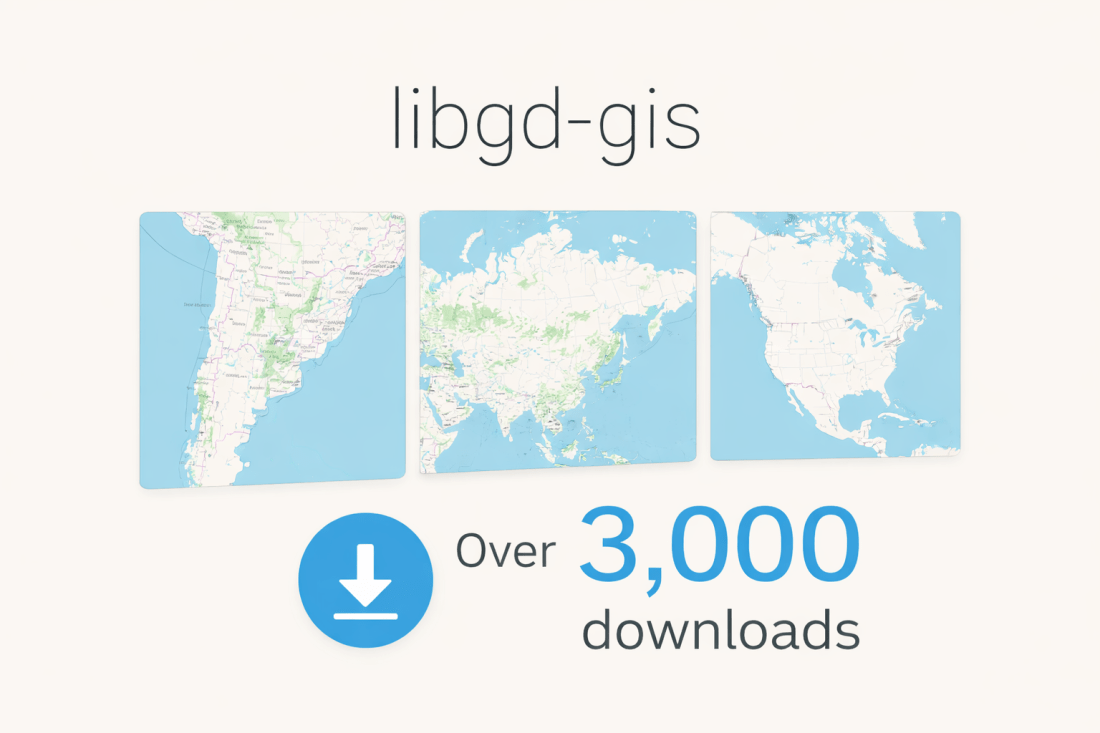
🌍 Rendering Maps by Name: Symbolic Geographic Extents in Ruby

Working with maps usually means working with numbers — lots of numbers. If you want to render a map of a country, region, or continent, you normally need to know its exact bounding box: bbox = [-73.6, -55.1, -53.6, -21.7] # Argentina Not exactly readable. Not memorable. Not friendly. What if you could just say: … Continue reading 🌍 Rendering Maps by Name: Symbolic Geographic Extents in Ruby

🧠 RubyKaigi 2024: A Deep Technical Shift in Ruby’s Standard Library (With Real Examples)

February 20, 2026 RubyKaigi 2024 — Historical ContextAlthough this presentation discusses Ruby 3.4–3.5 and the ecosystem has already moved forward to Ruby 4 by 2026, the strategic shift it describes — reducing the traditional standard library and externalizing functionality as gems — represents a fundamental change in Ruby’s philosophy rather than a version-specific roadmap.Understanding this … Continue reading 🧠 RubyKaigi 2024: A Deep Technical Shift in Ruby’s Standard Library (With Real Examples)

Stop Checking admin?: Designing Authorization That Won’t Become Technical Debt (Kaigi on Rails 2025)

February 17, 2026 Modern Rails applications rarely fail because of authentication — they fail because of authorization complexity. As products grow, roles multiply, exceptions accumulate, and permission checks scatter across controllers, models, views, and frontend code. What begins as a simple current_user.admin? quickly becomes an unmaintainable web of implicit rules. At Kaigi on Rails 2025, … Continue reading Stop Checking admin?: Designing Authorization That Won’t Become Technical Debt (Kaigi on Rails 2025)

From Delayed Job to Solid Queue: How a 10-Year Rails App Finally Achieved Linear Scaling

From Delayed Job to Solid Queue: How a 10-Year Rails App Finally Achieved Linear Scaling February 16, 2026 Lessons from Kaigi on Rails 2025 — Shohei Kobayashi In large Rails systems, background jobs are not a detail — they are the system. Email delivery, AI processing, document generation, data cleanup, notifications, analytics pipelines — everything … Continue reading From Delayed Job to Solid Queue: How a 10-Year Rails App Finally Achieved Linear Scaling

Only 3% Got It Right: 5 Dangerous Ruby on Rails Code Patterns from RubyKaigi

Only 3% Got It Right: 5 Dangerous Ruby on Rails Code Patterns from RubyKaigi February 9, 2026 At RubyKaigi 2025, a deceptively simple Rails code quiz was presented at a booth. It looked like everyday production code — nothing exotic, no trick questions. About 100 developers attempted it. Only 3 answered everything correctly. This article … Continue reading Only 3% Got It Right: 5 Dangerous Ruby on Rails Code Patterns from RubyKaigi

Tackling Inevitable I/O Latency in Rails

February 6, 2026 Lessons from Kaigi on Rails 2025 on SSE and Async Modern Rails applications increasingly depend on external systems: third-party APIs, background services, data pipelines, and—more recently—AI and LLM inference. While Rails itself continues to evolve in performance and concurrency, I/O latency remains largely unavoidable in many real-world scenarios. At Kaigi on Rails … Continue reading Tackling Inevitable I/O Latency in Rails