

December 4, 2025
Most developers think contributing to Ruby’s internals requires wizard-level C skills, decades of experience, and a direct line to Matz.
Advertise on RubyStackNews
RubyStackNews is a niche publication read by Ruby and Rails developers worldwide. Our audience includes senior engineers, tech leads, and decision-makers from the US, Europe, and Asia.
Sponsorship Options
Your brand featured inside a technical article (clearly marked as sponsored).
Highlighted sponsor section embedded within an article.
Logo + link displayed site-wide in the sidebar.
- Highly targeted Ruby / Rails audience
- Organic traffic from search and developer communities
- No ad networks — direct sponsorships only
Interested in sponsoring RubyStackNews?
Contact via WhatsAppBut sometimes… all it takes is pressing backspace on an emoji.
This post breaks down the real technical process behind fixing a surprising IRB crash — caused by deleting a family emoji 👨👩👧👦 — and why this kind of bug is exactly where any Ruby engineer can start contributing to open source.
Reference:

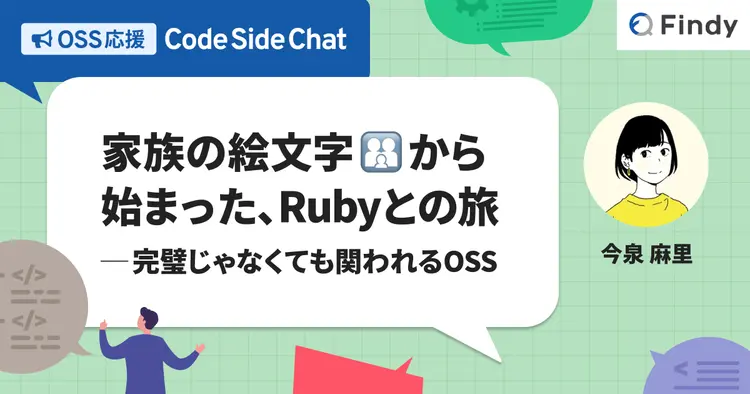
This post was inspired by an interview published by Findy showing how a real-life emoji-related bug in IRB led to contributions to Reline and Ruby’s text-handling internals. The original story highlights the journey from identifying a small Unicode issue to becoming an OSS contributor.
🐛 The Bug: Press Backspace, Boom — IRB Crashes
The issue was easy to reproduce:
- Open IRB
- Paste a “family” emoji (which is actually multiple Unicode codepoints joined together)
- Press backspace
- IRB blows up
The reason?
That emoji isn’t a single character. It’s a grapheme cluster built from several codepoints linked by Zero-Width Joiners (ZWJ). IRB tried to delete just one part of the cluster → internal inconsistency → crash.
🔍 Step 1: Reproducing and Documenting the Crash
The most important part of any OSS contribution isn’t coding — it’s documenting what actually happens.
$ irb
> "👨👩👧👦"
# Hit backspace repeatedly
# => crash
No deep Unicode knowledge required. Just observe → document → isolate.
🧠 Step 2: Understanding the Root Cause (Hint: Unicode Is Hard)
IRB itself doesn’t handle editing logic. That job belongs to Reline, Ruby’s line editor.
Reline handles:
- cursor movement
- character width
- backspace behavior
- multibyte width calculation
- grapheme boundaries
Reline was deleting codepoints, not graphemes. This meant the cursor could land inside the emoji cluster — a state it couldn’t recover from.
🛠 Step 3: Fixing It — Switching to Grapheme-Aware Editing
The core of the fix involved changing:
❌ “1 character = 1 codepoint” (wrong in Unicode) to ✅ “1 character = 1 grapheme cluster”
Ruby already provides the tools:
require "unicode/grapheme_break"

clusters = buffer.grapheme_clusters
The patch updated Reline so backspace:
- removes an entire grapheme
- never splits a cluster in the middle
- adjusts cursor and buffer state safely
- redraws the line correctly
Example logic (simplified):
clusters = buffer.grapheme_clusters
index = cursor_cluster_index
clusters.delete_at(index)
buffer = clusters.join
🧪 Step 4: Testing the Fix (The Fun Part)
The patch had to work across a wide range of Unicode scenarios:
- single emojis (😄)
- ZWJ-joined emojis (👨👩👧👦)
- skin-tone modifiers (👍🏽)
- accent-combined characters (é)
- wide characters (漢字)
- repeated backspaces
- different terminals and locales
This ensured Reline behaved correctly across all edge cases.
🚀 Why This Matters: Real Contributions Start With “Small” Bugs
This fix shows something every developer should hear:
👉 You don’t need to be an expert to improve Ruby. 👉 You don’t need to understand the whole codebase. 👉 You just need to spot something weird, document it, and take the first step. 👉 The community helps you with the rest.
A tiny crash — caused by deleting an emoji — led to a real, meaningful improvement in IRB and Reline.
And someone new to Ruby internals was able to drive the fix.
💡 Final Thought
If you’ve ever thought: “I’d love to contribute to Ruby, but I’m not ready…”
remember: this contribution started by deleting an emoji.
You might already be closer to contributing than you think.

 Linking Ruby knowledge from the most remote places in the world.