
February 26, 2026
In recent years, Ruby and Ruby on Rails have quietly entered a phase of rapid, multidimensional evolution. Rather than a single disruptive change, what we are witnessing is a coordinated advance across the runtime, the framework, infrastructure tooling, and application capabilities.
This shift has been especially visible in talks from RubyKaigi 2024–2026 and Kaigi on Rails 2025, where deep technical discussions signal a language not standing still — but preparing for its next decade.
Language & Runtime Evolution (Ruby 4)

Ruby 4’s Quiet Improvements
Ruby 4 doesn’t arrive with a flashy headline feature. Instead, it delivers a dense package of under-the-hood engineering improvements: reduced allocations, refinements in the VM, better JIT behavior, and internal API polish. The result is not dramatic in isolation, but cumulative in effect — applications feel smoother, more predictable, and more efficient under load. It’s the kind of progress that shows up in production dashboards rather than conference demos.
Ruby 4 Concurrency Gets Real
Concurrency in Ruby has historically been constrained by safety concerns and the GVL. With Ruby 4, Ractors mature into a practical tool rather than an experimental one. Communication patterns are improved, overhead is reduced, and CPU-bound parallelism becomes genuinely viable. Ruby is not abandoning safety — it is redefining how to achieve parallel execution without sacrificing correctness.
Pluggable Garbage Collectors in Ruby
Allowing interchangeable garbage collectors is a strategic shift toward a modular VM architecture. Different workloads have radically different memory profiles, and a single GC strategy cannot optimize them all. By enabling pluggable collectors, Ruby opens the door to low-latency systems, high-throughput data processing, and specialized environments such as embedded devices. This positions Ruby as a platform adaptable to domains far beyond traditional web services.
Shift in Ruby’s Standard Library
Ruby’s standard library is becoming leaner and more modular. Components are increasingly distributed as gems, allowing them to evolve independently of the interpreter’s release cycle. This reduces maintenance burden in the core while accelerating innovation at the ecosystem level. In practical terms, Ruby becomes smaller — and therefore faster to evolve.
Rails & Ecosystem Advances (Rails 8.1)
Solid Queue
Solid Queue represents Rails doubling down on operational simplicity. By providing a database-backed job system built into the framework, many applications can avoid introducing additional infrastructure such as Redis. This lowers deployment complexity and aligns with Rails’ long-standing philosophy: powerful defaults that work out of the box.
Rails Authentication Generator
Authentication has historically been one of the first external dependencies added to a Rails project. Rails 8.1 changes that equation by offering an official generator covering login, registration, password recovery, and session management. Developers can now bootstrap a secure, production-ready authentication system immediately, reducing both setup time and dependency risk.
Parallel Execution with the parallel Gem
Parallel processing becomes less intimidating thanks to improved resource management. Issues like database connection pool exhaustion — a classic pain point — are mitigated through better coordination between threads and processes. This enables Ruby applications to leverage multicore CPUs for compute-heavy workloads without turning the system into a fragile concurrency experiment.
Rails Meets PostgreSQL 18
Rails continues to deepen its integration with PostgreSQL, taking advantage of modern database capabilities such as advanced data types and performance enhancements. PostgreSQL increasingly functions not just as a storage layer but as a powerful computational partner, enabling sophisticated queries and data modeling while maintaining Rails’ hallmark developer ergonomics.
Filling a Strategic Gap: Native Graphics & GIS in Ruby
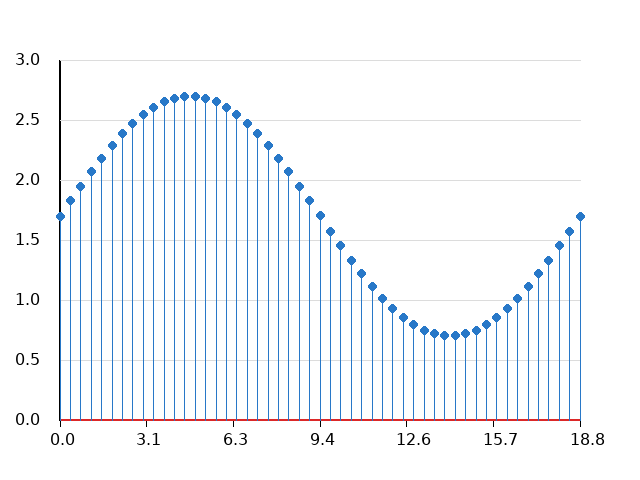
Amid this wave of progress, one important area remained underserved: native image processing and geographic visualization.
While Ruby excels at web development and business logic, it historically relied on external ecosystems for serious graphics and GIS workloads. Recognizing this gap, I began developing two complementary libraries:
- ruby-libgd — native Ruby bindings to the GD graphics library
- libgd-gis — a GIS engine built on top of GD raster capabilities
Together, these tools enable Ruby to:
- Render maps and complex graphics programmatically
- Draw polygons, routes, markers, and geographic features
- Generate animated visualizations
- Produce images suitable for emails, reports, dashboards, or PDFs
- Support GIS workflows without heavyweight external software
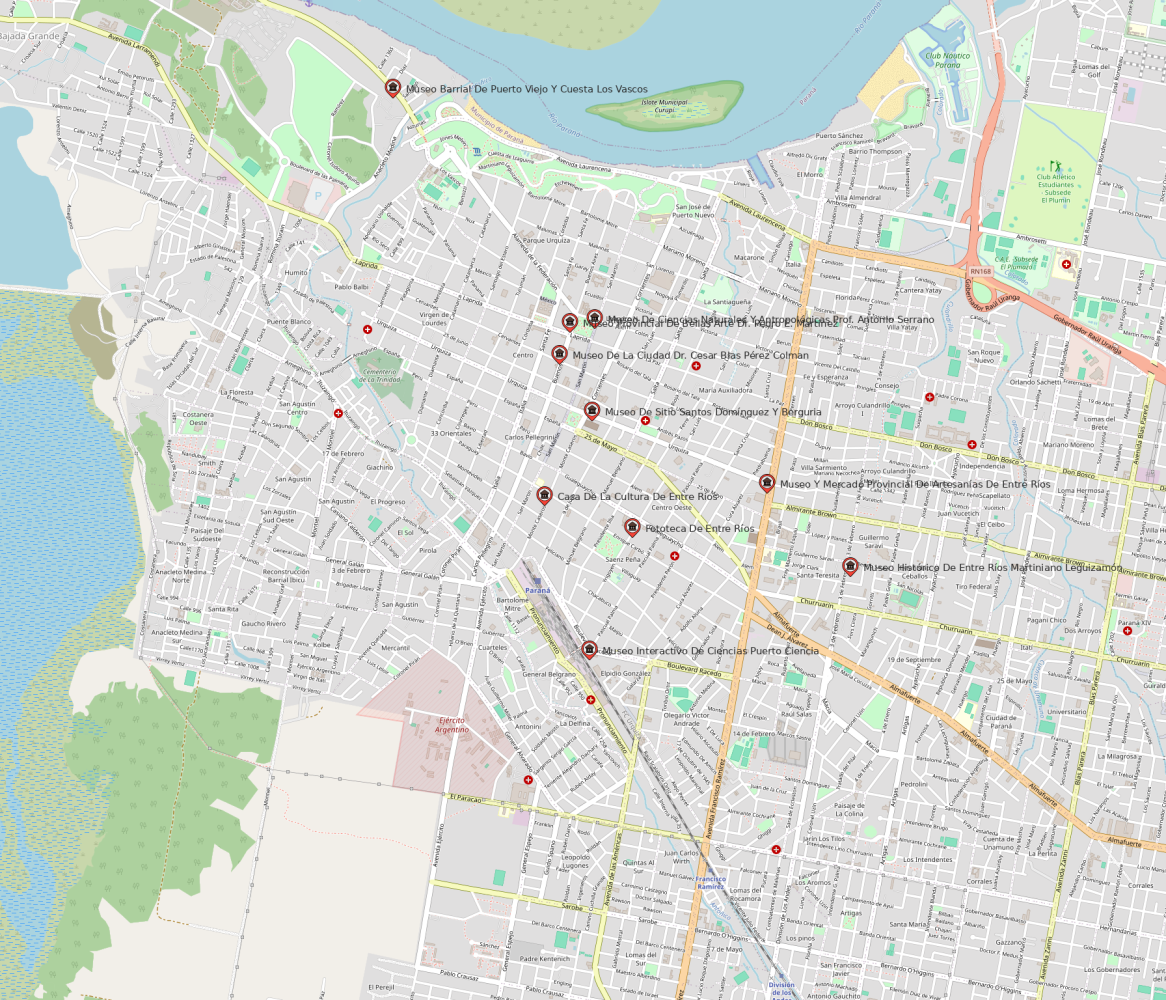
This effectively brings Ruby into domains such as logistics, urban planning, monitoring systems, scientific visualization, and automated reporting — areas where native graphics capabilities are essential.
https://ggerman.github.io/ruby-libgd/
https://ggerman.github.io/libgd-gis/
The Bigger Picture: Convergence Across the Stack
What makes this moment unique is not any single innovation, but the convergence of many:
- A faster, more adaptable runtime
- Practical parallelism
- Modular architecture
- Simplified infrastructure patterns
- Deeper database integration
- Expanding application domains
Ruby is evolving from a “web framework language” into a general-purpose platform capable of supporting transversal solutions across industries.
A Call to the Western and LATAM Communities
Much of the deepest technical momentum behind Ruby today originates from the Japanese community, where conference talks frequently explore cutting-edge aspects of the language and VM.
Meanwhile, adoption in Latin America and the broader Western ecosystem often advances more slowly, not due to lack of talent but due to lack of visibility.
The opportunity is clear: this is the moment for developers, teams, and companies outside Japan to re-engage with Ruby’s evolution, experiment with its new capabilities, and contribute to shaping its future.
Ruby is not standing still — and those who move with it will find a platform more capable than ever before.

 Linking Ruby knowledge from the most remote places in the world.