
Why Ruby Still Has Unexplored Frontiers
Why Ruby Still Has Unexplored Frontiers
For many developers, Ruby is synonymous with Rails, web applications, and backend services. That association is understandable—and well earned—but it is also incomplete.
Ruby has always been more than a framework or a web stack. It is a language designed for human expression, clarity, and problem-solving. PicoRuby challenges us to revisit that idea by taking Ruby into a domain where it has rarely been seen: embedded systems and constrained hardware.
This is not about replacing C or Rust.
It is about expanding what Ruby can mean.
What Is PicoRuby?
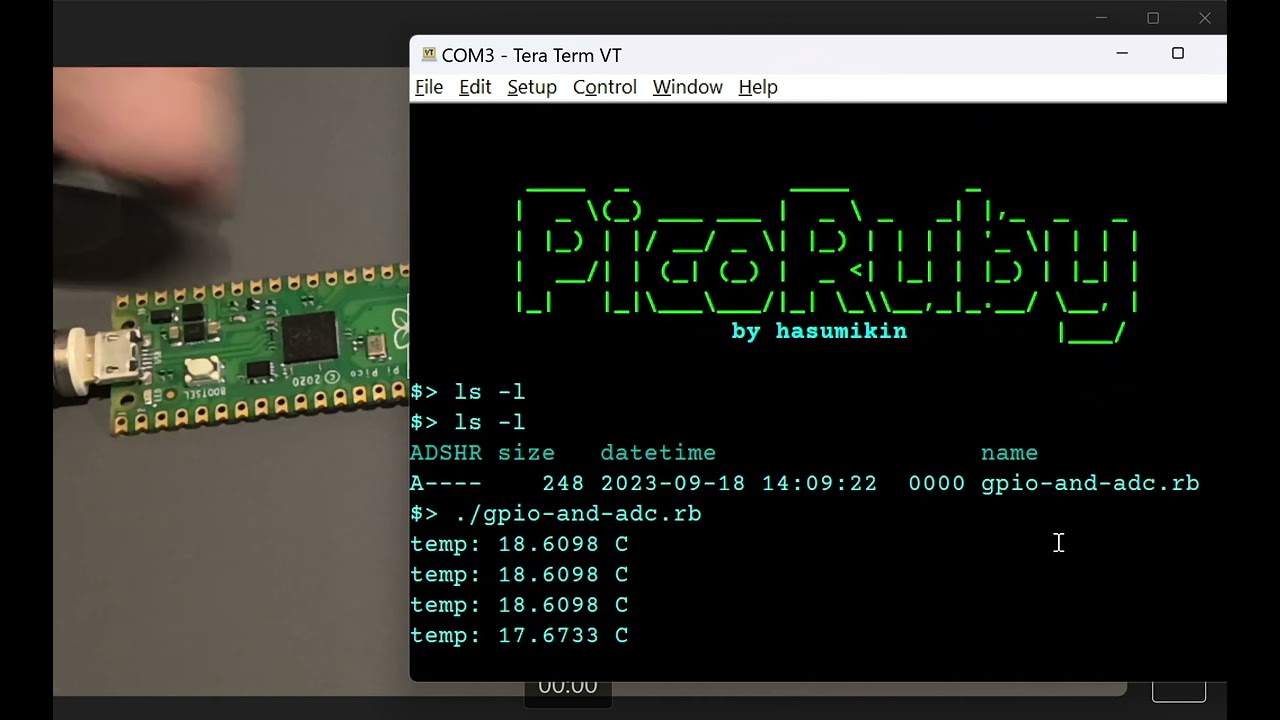
PicoRuby is a lightweight Ruby implementation designed to run on microcontrollers and resource-constrained environments. It brings Ruby’s expressiveness into places traditionally dominated by low-level languages.
Instead of servers and cloud infrastructure, PicoRuby targets:
- Microcontrollers
- Embedded devices
- Edge computing scenarios
- Hardware experimentation and education
This shift is significant. It reframes Ruby not as a “high-level only” language, but as a tool that can scale down, not just up.
Why PicoRuby Matters to the Ruby Ecosystem
1) It Expands Ruby’s Technical Identity
Languages that survive decades are those that evolve across domains. PicoRuby positions Ruby alongside languages that are not confined to a single paradigm or industry.
It signals that Ruby can participate in:
- Systems thinking
- Hardware-software integration
- Performance-aware environments
That matters for the long-term relevance of the language.
2) It Lowers the Barrier to Embedded Exploration
Embedded development has historically been intimidating:
- Complex toolchains
- Low-level memory management
- Steep learning curves
PicoRuby introduces a gentler entry point. Developers familiar with Ruby can explore hardware concepts without abandoning the mental models they already understand.
This is particularly powerful for:
- Educators
- Hobbyists
- Software engineers curious about hardware but hesitant to start
3) It Aligns with Ruby’s Educational Philosophy
Ruby has always favored:
- Readability
- Feedback loops
- Learning by building
PicoRuby fits naturally into that philosophy. Writing code that directly interacts with physical devices creates immediate, tangible feedback—an ideal environment for deep learning.
“Create problems.
Publish them.
Teach by building challenges.
That is how mastery is achieved.”
Why RubyStackNews Covers PicoRuby
RubyStackNews exists to explore the full surface area of Ruby, not only its most popular use cases.
Covering PicoRuby is a deliberate choice:
- It highlights emerging areas before they become mainstream
- It connects global Ruby communities, including strong contributions from Japan
- It encourages deeper technical curiosity within the ecosystem
This is not about trends or hype. It is about understanding where Ruby can grow next.
This Is Not a Community—Yet
At this stage, PicoRuby coverage on RubyStackNews is not a standalone community, forum, or product.
It is:
- A curated editorial space
- A place to document experiments, ideas, and real-world use cases
- An invitation to thoughtful discussion
If you are experimenting with PicoRuby—or considering it—you are already part of that conversation.
Looking Forward
In future articles, RubyStackNews will explore:
- Practical PicoRuby examples
- Comparisons with mruby and other embedded approaches
- Interviews with people building PicoRuby tools and projects
- The role of embedded Ruby in education and prototyping
Ruby is not finished evolving.
PicoRuby is one more reminder that the language still has unexplored frontiers—and that curiosity remains one of its strongest features.
— Germán
Founder, RubyStackNews
 Linking Ruby knowledge from the most remote places in the world.